
Top Hiring Risks Companies Ignore
Hiring the right employees is one of the most important factors behind business growth and long-term success. Yet many companies still focus only on resumes, interviews, and quick recruitment timelines while overlooking critical hiring risks that can create serious operational and financial problems later.
In today’s competitive business environment, especially across growing markets like Jakarta, Indonesia, and Southeast Asia, organizations are hiring rapidly to meet expanding business demands. However, without proper hiring risk management and background verification processes, companies may unknowingly expose themselves to fraud, compliance issues, workplace misconduct, and reputational damage.
The cost of a bad hire is often much greater than businesses expect. From financial losses to reduced productivity, the impact can affect every part of an organization. Understanding the most commonly ignored hiring risks is essential for businesses that want to build stronger, safer, and more reliable teams.
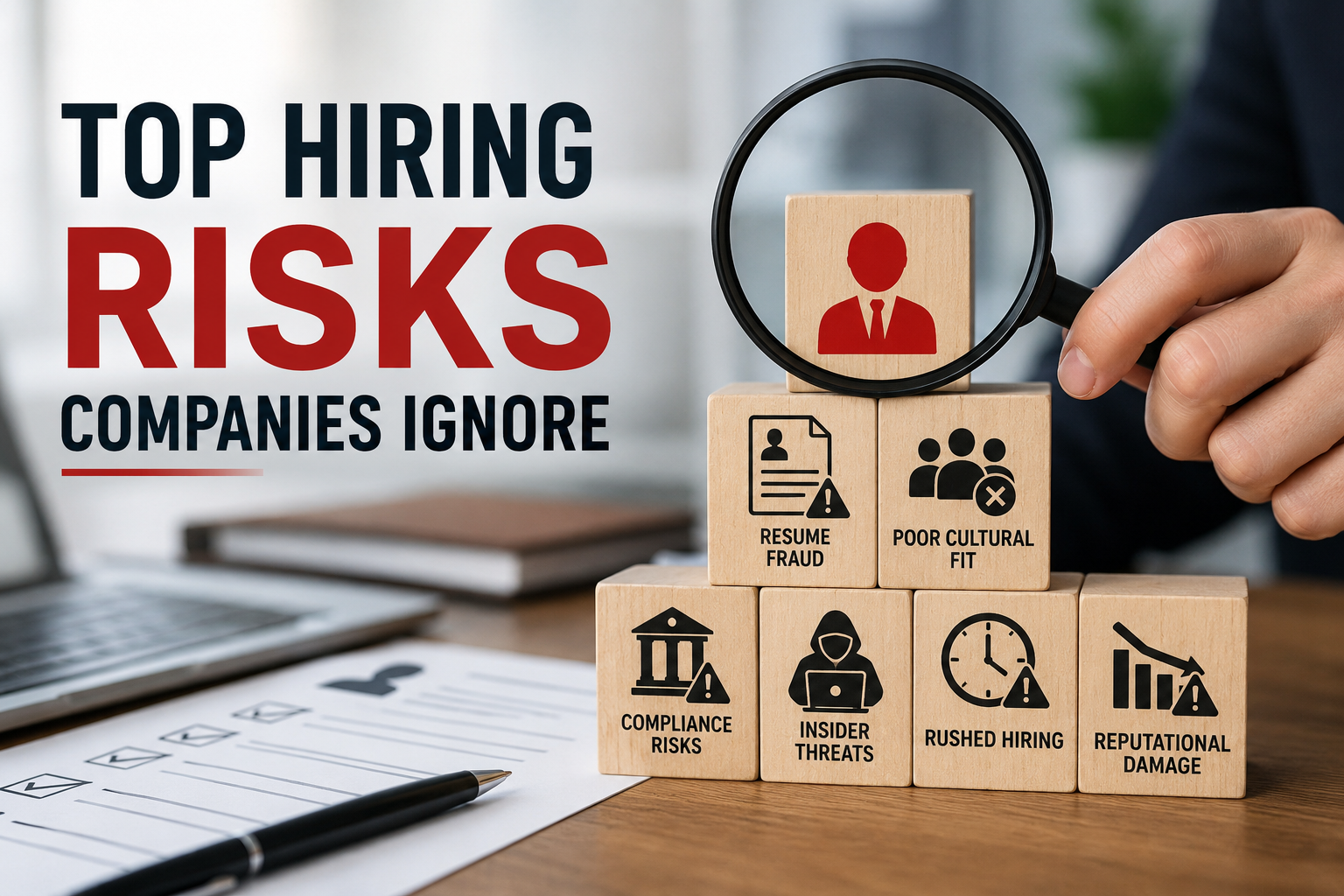
Why Hiring Risks Matter More Today
1. Resume Fraud and False Information
One of the most overlooked hiring risks is resume fraud. Candidates may exaggerate their qualifications, falsify employment history, or provide inaccurate information about certifications and skills.
Without proper verification, businesses may hire individuals who are not qualified for the role. This can lead to poor performance, operational disruptions, and increased employee turnover.
In industries involving finance, technology, healthcare, and corporate services, inaccurate credentials can create even greater risks. Background screening services help businesses verify employment records, education details, and identity information before making hiring decisions.
Companies across Indonesia and Singapore increasingly rely on professional pre-employment screening to reduce hiring fraud and improve recruitment accuracy.
2. Ignoring Cultural and Integrity Fit
Hiring decisions are often based heavily on technical qualifications, while cultural fit and integrity are overlooked. An employee may have the required skills but still create workplace conflicts or ethical concerns.
Poor integrity can result in internal fraud, policy violations, or reputational damage. Employees who do not align with company values may negatively affect team morale and workplace productivity.
Integrity checks and background verification processes help organizations identify potential red flags before onboarding candidates. Businesses that prioritize ethical hiring are more likely to build positive workplace cultures and long-term employee trust.
3. Compliance and Legal Risks
Many companies underestimate the legal and compliance risks associated with hiring. Employment regulations, work authorization requirements, and industry-specific compliance standards vary across different countries and sectors.
For example, businesses operating in Singapore must comply with strict employment verification and regulatory requirements. Failure to conduct proper checks can expose organizations to legal penalties and reputational harm.
Cross-border hiring in Southeast Asia also requires careful due diligence to ensure employees meet local employment standards. Businesses that ignore compliance risks may face operational disruptions and legal complications in the future.
4. Insider Threats and Employee Misconduct
Cybersecurity and internal fraud risks are no longer limited to external threats. Insider threats have become a growing concern for businesses across industries.
Employees with access to confidential information, financial systems, or customer data can create serious security risks if proper screening is not conducted during recruitment.
Employee misconduct, data theft, and financial fraud often begin with weak hiring processes. Digital forensics investigations and employee fraud cases frequently reveal that organizations failed to identify warning signs during recruitment.
Businesses can significantly reduce insider threats by implementing stronger hiring verification and risk assessment procedures.
5. Hiring Too Quickly Without Verification
Fast hiring is often necessary in competitive industries, but rushing recruitment without proper checks can create long-term problems.
Companies focused only on filling vacancies quickly may skip background verification, reference checks, or identity screening. While this may save time initially, it can lead to poor hiring decisions that are expensive to correct later.
Replacing employees, retraining teams, and resolving workplace issues often costs far more than conducting proper screening from the beginning.
Businesses in Jakarta and across Southeast Asia are increasingly balancing recruitment speed with secure hiring practices to reduce long-term operational risks.
6. Reputational Damage from Poor Hiring Decisions
A company’s reputation can be affected significantly by employee behavior. Hiring individuals involved in unethical conduct, fraud, or professional misconduct can damage client trust and public confidence.
In today’s digital environment, reputational damage spreads quickly and can impact partnerships, investor relationships, and future hiring opportunities.
Background verification services help organizations protect their brand reputation by ensuring employees meet professional and ethical standards before joining the company.
The Role of Background Screening in Risk Management
Background screening is one of the most effective ways to reduce hiring risks. It provides businesses with verified information about candidates and helps organizations make informed hiring decisions.
Pre-employment screening may include:
- Identity verification
- Employment history checks
- Education verification
- Integrity assessments
- Criminal record checks
- Reference verification
By conducting proper due diligence during recruitment, businesses can strengthen workplace security, improve compliance, and reduce the likelihood of fraud or misconduct.
Why Businesses in Southeast Asia Are Prioritizing Hiring Risk Management
As Southeast Asia continues to grow as a major business hub, companies across Jakarta, Singapore, and surrounding regions are focusing more on secure hiring practices.
Global expansion, remote hiring, and digital transformation have increased the need for stronger recruitment controls. Businesses are now investing in background screening and due diligence solutions to protect operations and maintain compliance.
Organizations that proactively manage hiring risks are better positioned to build reliable teams and support long-term business growth.
How Veris Supports Secure Hiring
At Veris, we help businesses reduce hiring risks through professional background screening and risk intelligence services. Our solutions are designed to support secure recruitment, compliance management, and employee verification across Southeast Asia.
From identity checks and employment verification to integrity assessments and fraud investigations, our services help organizations make confident hiring decisions while protecting operational integrity.
With deep regional expertise in Singapore, Indonesia, and Southeast Asia, Veris supports businesses in building safer and more trustworthy workplaces.
Conclusion
Hiring risks are often underestimated until they create serious business challenges. Resume fraud, compliance issues, insider threats, and poor cultural fit can all affect organizational performance and reputation.
Companies that invest in proper background verification and hiring risk management are better equipped to make informed recruitment decisions and reduce operational vulnerabilities.
In today’s fast-moving business environment, secure hiring is no longer optional. It is an essential part of building resilient, compliant, and successful organizations.
Frequently Asked Questions
1. What are common hiring risks businesses ignore?
Common hiring risks include resume fraud, compliance issues, insider threats, poor cultural fit, and skipping background verification.
2. Why is background screening important in recruitment?
Background screening helps businesses verify candidate information, reduce hiring fraud, and improve workplace security.
3. Can hiring risks affect company reputation?
Yes, poor hiring decisions can lead to employee misconduct, fraud, and reputational damage that impacts business credibility.
4. What industries benefit most from hiring risk management?
Industries such as finance, healthcare, technology, logistics, and corporate services benefit significantly from secure hiring practices.
5. How can businesses reduce hiring risks?
Businesses can reduce hiring risks through professional background verification, integrity checks, and structured recruitment processes.