
Why Vendor Due Diligence Is Critical Before Signing Any Business Partnership
Every successful business partnership begins with trust. Whether you are onboarding a supplier, appointing a distributor, selecting a contractor, or entering a joint venture, your business becomes connected to the actions and reputation of the other party. While many organizations focus on pricing, delivery capabilities, and commercial terms, they often overlook one of the most important steps before signing an agreement vendor due diligence.
In today’s interconnected business environment, companies across Singapore, Indonesia, and Southeast Asia are working with an increasing number of third-party vendors. Although these partnerships create opportunities for growth, they also introduce financial, legal, operational, and reputational risks. A thorough vendor due diligence process helps businesses identify these risks before they become costly problems. Vendor due diligence is widely used to evaluate suppliers, distributors, contractors, and other third parties before engagement, helping organizations make informed business decisions.
What Is Vendor Due Diligence?
Vendor due diligence is the process of evaluating a third party before establishing a business relationship. Rather than relying solely on documents provided by the vendor, businesses verify critical information independently to assess credibility, financial stability, ownership structure, compliance history, and potential reputational concerns.
The purpose is not to create obstacles for suppliers but to ensure that every partnership aligns with the organization’s risk management and compliance standards. As businesses expand internationally, vendor due diligence has become an essential component of corporate governance and third-party risk management.
Why Businesses Should Never Skip Vendor Due Diligence
Third-party relationships create opportunities for growth, but they also introduce risks that businesses cannot afford to ignore. Financial instability is one of the most common concerns. A supplier experiencing financial difficulties may fail to deliver products or services, disrupting your operations.
Compliance risks also deserve careful attention. Vendors that fail to follow applicable laws or industry regulations may expose your organization to investigations or contractual disputes. Reputational risk is another significant factor. Public association with unethical or fraudulent vendors can damage customer confidence and investor trust. Vendor due diligence helps businesses identify these concerns before they affect operations.
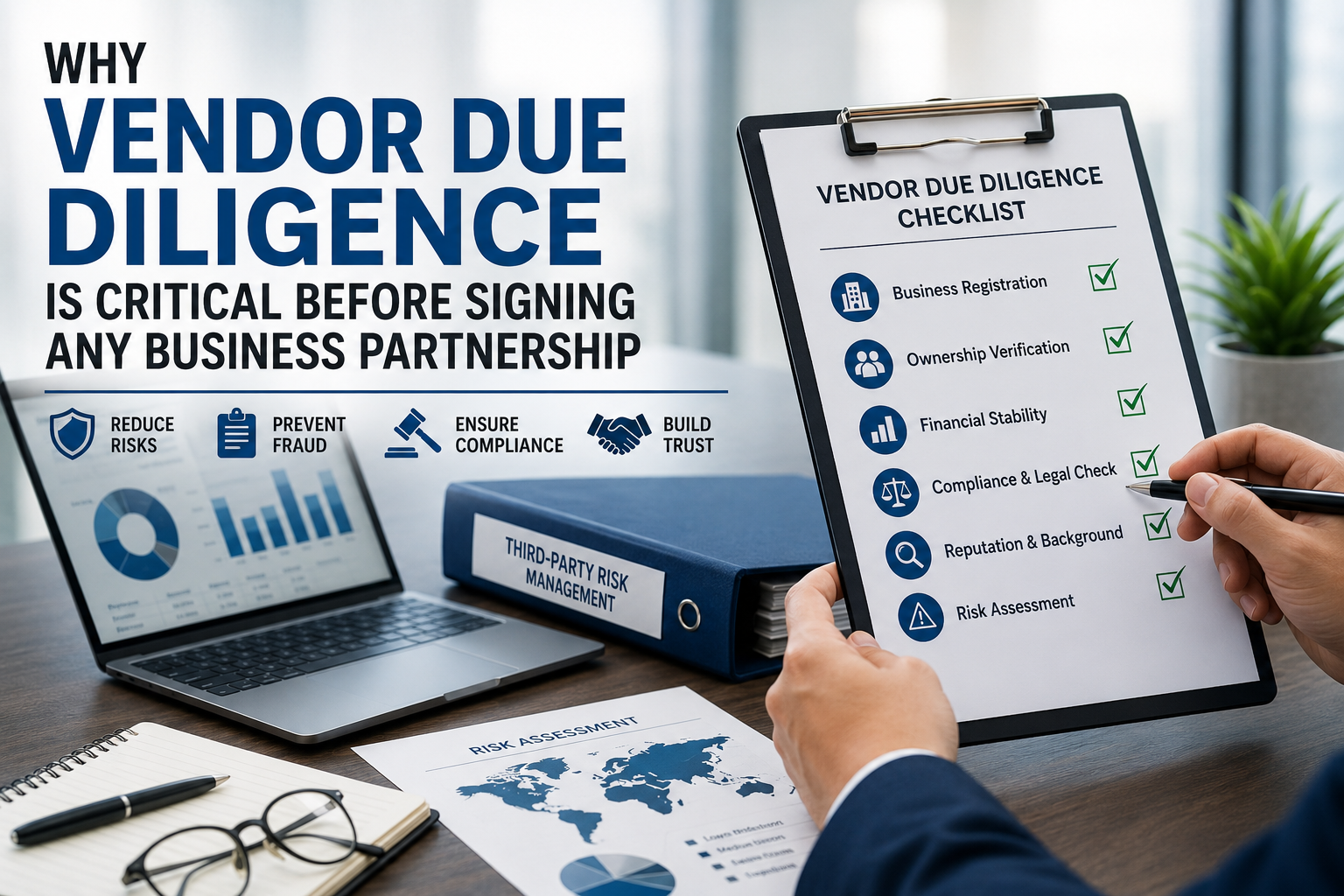
What Should Be Verified During Vendor Due Diligence?
Poor vendor selection can have lasting consequences. Operational delays caused by unreliable suppliers may interrupt production schedules and customer commitments. Fraud involving third parties can result in financial losses and lengthy investigations.
Businesses may also face contractual disputes, compliance breaches, or reputational damage if a vendor becomes involved in unethical activities. Replacing an established supplier is often more expensive than conducting proper due diligence before signing the agreement.
How Veris Supports Vendor Due Diligence
At Veris, we help organizations evaluate third-party relationships through professional vendor due diligence services tailored to the needs of modern businesses. Our approach combines structured research, public-domain intelligence, document verification, integrity reviews, and regional expertise to help businesses understand potential risks before entering commercial relationships. Veris provides due diligence, background screening, and investigative support for organizations across Asia.
Whether you are onboarding a supplier, evaluating a distributor, or assessing a strategic partner, our due diligence services provide practical insights that support informed business decisions.
Conclusion
Every business partnership carries an element of risk, but informed decisions significantly reduce uncertainty. Vendor due diligence enables organizations to verify information, identify potential concerns, and strengthen third-party risk management before agreements are signed. For businesses operating across Singapore, Indonesia, and Southeast Asia, conducting professional vendor due diligence is no longer simply a best practice it is a strategic investment in long-term business resilience, compliance, and sustainable growth.
Frequently Asked Questions (FAQs)
1. What is vendor due diligence?
Vendor due diligence is the process of evaluating a supplier or third party before entering a business relationship to identify financial, legal, operational, and reputational risks.
2. Why is vendor due diligence important?
It helps businesses reduce third-party risks, prevent fraud, improve compliance, and make informed partnership decisions.
3. What information is verified during vendor due diligence?
Common checks include business registration, ownership, financial stability, litigation history, compliance status, and public reputation.
4. Which businesses should conduct vendor due diligence?
Organizations working with suppliers, contractors, distributors, consultants, technology providers, or strategic partners should perform vendor due diligence.
5. How can Veris help with vendor due diligence?
Veris provides professional vendor due diligence services across Singapore, Indonesia, and Southeast Asia, helping businesses evaluate third-party risks before engagement.