
Digital Forensics in Corporate Investigations: Securing Critical Evidence
In today’s corporate environment, almost every business interaction leaves a digital footprint. Emails, financial transactions, internal communications, cloud storage, messaging platforms and enterprise software systems all generate electronic data. When misconduct, fraud, regulatory breaches or disputes arise, this data often becomes the most critical source of truth.
Digital forensics plays a central role in modern corporate investigations by identifying, preserving and analysing electronic evidence in a structured and defensible manner. Without proper digital evidence handling, organisations risk losing vital information, compromising investigations or weakening their legal position.
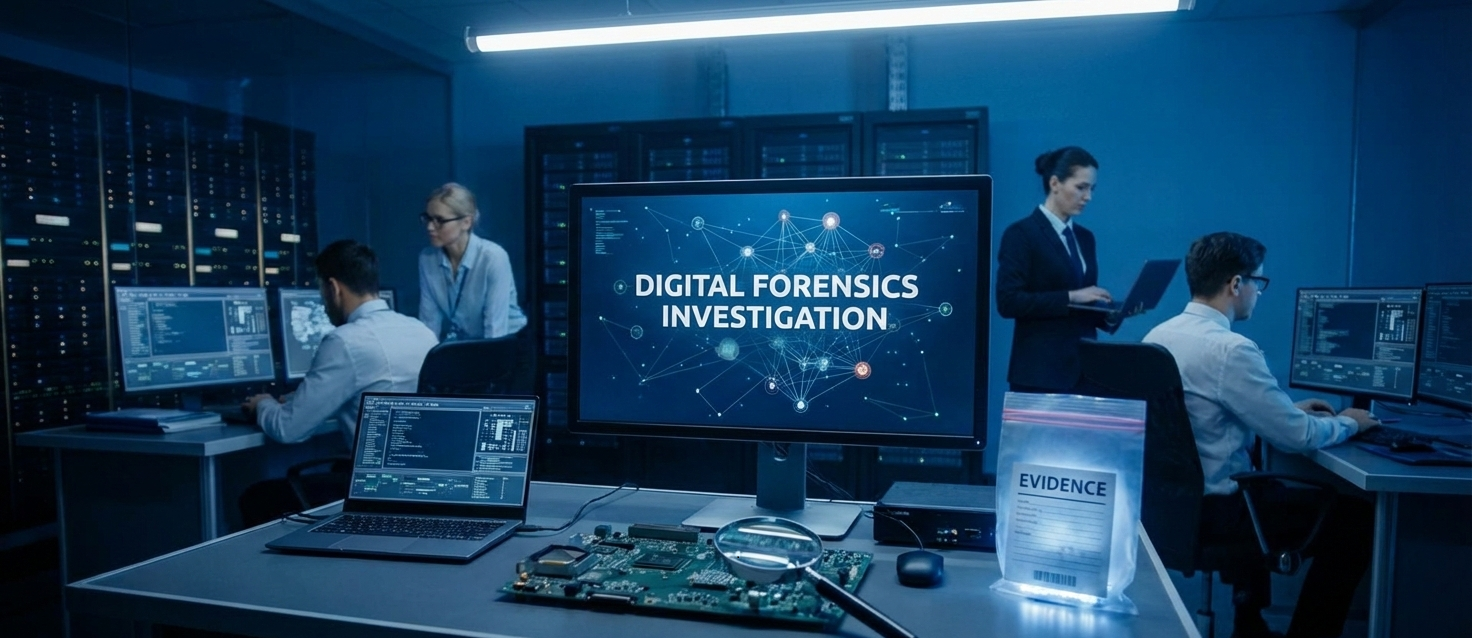
The Expanding Role of Digital Evidence in Corporate Risk
Corporate misconduct today rarely exists in paper files. Financial irregularities are recorded in accounting systems, internal communications occur via email or messaging platforms, and strategic decisions are documented in shared digital workspaces. Even physical access is often logged electronically through access control systems.
When allegations of employee misconduct, intellectual property theft, bribery, data misuse or regulatory violations arise, digital records provide the timeline and context necessary to understand what occurred. Digital forensics allows investigators to reconstruct events, trace communications and verify transactional activity with precision.
Unlike traditional investigations that rely heavily on witness testimony, digital evidence offers objective data. However, its reliability depends entirely on how it is collected and preserved.
What Digital Forensics Involves
Digital forensics is the structured process of identifying, securing, analysing and presenting electronic data in a legally defensible manner. It extends beyond simple data retrieval. The process requires technical expertise, investigative discipline and strict adherence to evidentiary standards.
The investigation typically begins with data preservation. Once potential misconduct is identified, it is critical to secure relevant systems immediately to prevent alteration, deletion or tampering. This may involve forensic imaging of devices, securing email servers or preserving cloud-based data repositories.
Following preservation, forensic analysis is conducted to identify relevant communications, transaction records, file transfers or deleted data. Advanced tools allow investigators to reconstruct activity logs, recover deleted files and map digital behaviour patterns. The objective is not only to gather information but to ensure that findings can withstand regulatory scrutiny or legal proceedings.
Why Securing Evidence Early Is Essential
Time is a critical factor in digital investigations. Electronic data can be overwritten, deleted or modified intentionally or unintentionally. Delayed action increases the risk of losing crucial evidence.
In corporate investigations involving internal fraud, data theft or compliance breaches, immediate digital preservation protects the integrity of the investigation. Proper chain-of-custody documentation ensures that evidence remains admissible if litigation or regulatory review follows. Failure to follow disciplined forensic procedures can compromise findings. Courts and regulators often scrutinise how digital evidence was obtained, whether data privacy laws were respected and whether investigative methods were proportionate and lawful.
Legal and Ethical Considerations
Digital investigations must balance organisational interests with employee privacy rights and data protection obligations. Many jurisdictions impose strict requirements regarding the handling of personal data, cross-border data transfers and monitoring of employee communications.
A structured forensic process ensures that investigations remain compliant with applicable regulations. This includes clearly defining the scope of review, limiting data collection to relevant materials and safeguarding sensitive information.
Conclusion
Digital evidence has become central to modern corporate investigations. As organisations operate within increasingly complex digital ecosystems, securing and analysing electronic data is essential to identifying misconduct and protecting business interests.
Digital forensics provides the structured framework required to preserve critical evidence, uncover factual timelines and support defensible decision-making. When handled professionally and ethically, it strengthens governance, protects reputation and ensures accountability in the digital age.
Frequently Asked Questions
1. What is digital forensics in a corporate context?
Digital forensics involves the identification, preservation and analysis of electronic data to support internal investigations, regulatory reviews or legal proceedings.
2. When should an organisation initiate digital forensic procedures?
Forensic preservation should begin immediately once potential misconduct involving electronic systems is suspected to prevent loss or alteration of evidence.
3. Can deleted data be recovered during a forensic investigation?
In many cases, deleted files and communications can be recovered using specialised forensic tools, depending on system conditions and timing.
4. Is digital forensics compliant with data protection laws?
When conducted properly, digital forensics follows strict legal and privacy standards, ensuring that investigations remain proportionate and lawful.
5. How does digital forensics strengthen corporate governance?
It identifies control weaknesses, documents evidence objectively and supports informed corrective action, reducing future risk exposure.
How Veris Can Help
Veris provides structured digital forensics services to support corporate investigations, regulatory inquiries and dispute resolution processes. Our approach ensures secure evidence preservation, disciplined analysis and clear reporting that strengthens governance and protects organisational interests.
👉 Contact our team to discuss how Veris can help safeguard your critical digital evidence and investigative needs.