
Employee Misconduct Red Flags: Early Warning Signs Every Employer Should Know
Every organisation depends on trust. Employers trust their employees to act responsibly, follow company policies, and contribute to the organisation’s success. In most cases, this trust is well placed. However, internal misconduct can occur in any workplace, and when it does, the consequences can be serious.
Employee misconduct does not always appear suddenly. In many situations, warning signs begin to surface long before a serious incident occurs. Financial discrepancies, behavioural changes, or unexplained operational irregularities can indicate deeper problems within the organisation. Recognising these early indicators allows businesses to respond before minor issues develop into major risks.
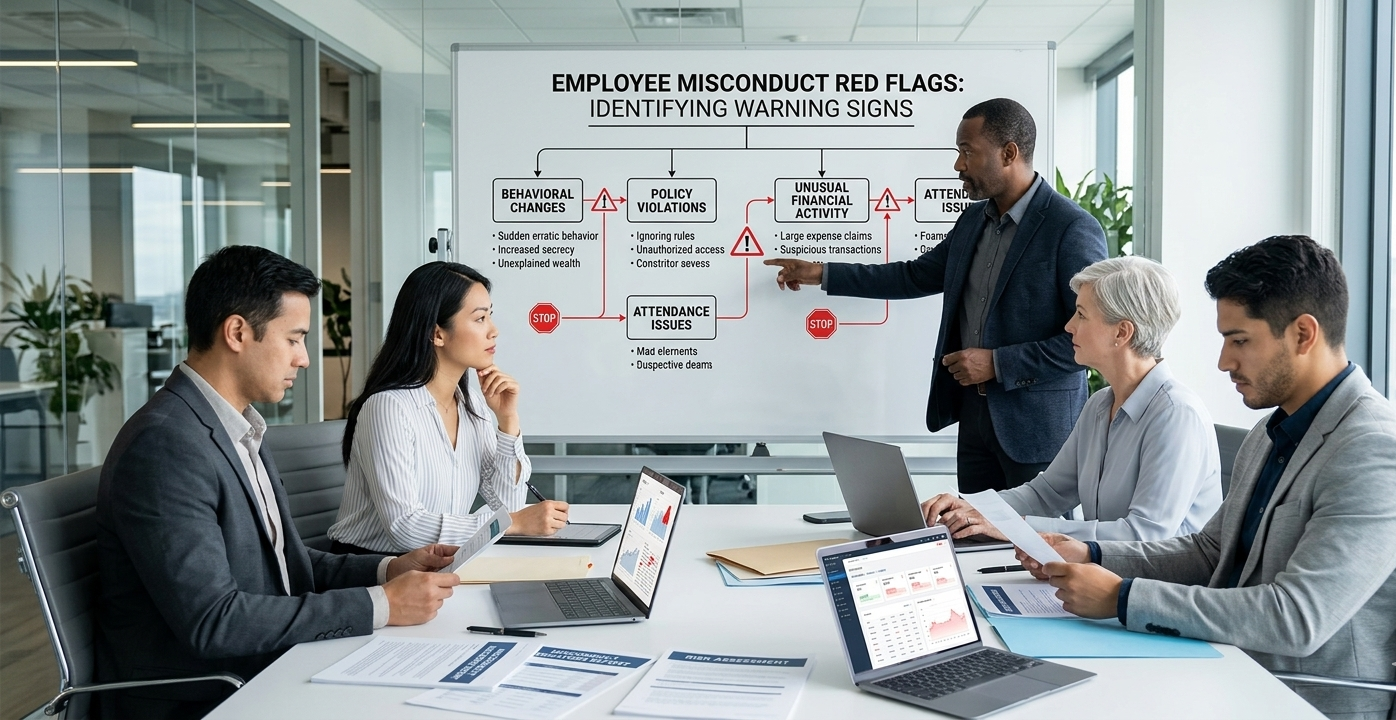
Understanding Employee Misconduct in the Workplace
Employee misconduct refers to actions taken by staff members that violate company policies, ethical standards, or legal obligations. These actions may involve misuse of company resources, manipulation of financial records, conflicts of interest, data misuse, or behaviour that damages the organisation’s integrity.
In many cases, misconduct develops gradually rather than appearing as a single event. Small irregularities may initially seem insignificant, but when patterns emerge over time they can reveal deeper problems within operational processes or governance structures.
Organisations that take early warning signs seriously are often able to prevent larger incidents. Early internal review and employee misconduct investigation provide clarity before issues escalate.
Why Early Detection Matters
When misconduct goes unnoticed, the consequences can extend far beyond the initial act. Financial losses may occur, internal trust can deteriorate, and the organisation’s reputation may suffer among clients, partners, or regulators.
Companies that identify potential issues early have a much better chance of resolving them quickly and professionally. Investigations conducted at the right time allow organisations to understand whether a situation involves misunderstanding, policy violations, or intentional misconduct.
Behavioural Warning Signs That Should Not Be Ignored
Changes in employee behaviour are often one of the earliest indicators that something may be wrong. Employees who previously worked transparently may begin to avoid oversight, resist audits, or attempt to control information that was previously shared openly. Unusual working patterns can also raise concerns. Employees who refuse to take leave, insist on handling certain processes alone, or react defensively when questioned about financial transactions may be trying to conceal irregularities.
Another potential red flag is a sudden lifestyle change that appears inconsistent with known income levels. While such situations do not automatically indicate misconduct, they may justify closer review in certain circumstances. Recognising these behavioural indicators allows management to take precautionary steps before larger issues develop.
Operational Irregularities That May Signal Misconduct
Employee misconduct may also become visible through unusual operational activity. Financial discrepancies, repeated errors in expense reporting, or unexplained vendor relationships can indicate potential irregularities within business processes. In procurement environments, recurring contracts awarded to the same supplier without clear justification may signal conflicts of interest. Similarly, unusual financial transactions or unexplained adjustments in accounting records can suggest manipulation or unauthorised activity.
When operational irregularities appear repeatedly, organisations may need to initiate a structured employee misconduct investigation to determine whether policies have been violated.
The Role of Structured Investigations
Responding to suspected misconduct requires careful handling. Organisations must balance the need to investigate with the responsibility to maintain fairness, confidentiality, and compliance with employment regulations. A structured investigation typically begins by reviewing available documentation and identifying the scope of the issue. Relevant financial records, internal communications, and operational data may be examined to determine whether inconsistencies exist.
If necessary, interviews may be conducted to clarify circumstances and understand how the issue developed. The objective is not to assign blame prematurely but to establish factual understanding of the situation. Professional employee misconduct investigations ensure that findings are based on evidence rather than speculation.
Strengthening Governance Through Investigation
Investigations often reveal more than individual wrongdoing. They frequently uncover systemic weaknesses that allowed misconduct to occur.
For example, insufficient segregation of duties, inadequate financial oversight, or unclear approval processes can create environments where irregular behaviour becomes easier to conceal. By addressing these weaknesses, organisations can strengthen governance and reduce the risk of future incidents. Learning from investigative findings helps businesses build stronger internal control systems and promote a culture of accountability.
Conclusion
Internal risks can be difficult to detect because they often develop quietly within everyday operations. However, organisations that remain attentive to warning signs are far better positioned to prevent serious misconduct.
Employee misconduct investigations provide businesses with the tools needed to understand potential issues, protect organisational assets, and reinforce professional standards within the workplace. Early identification of red flags allows companies to respond responsibly and maintain the trust of employees, partners, and stakeholders.
Frequently Asked Questions
1. What is an employee misconduct investigation?
An employee misconduct investigation is a structured process used to examine suspected violations of company policies, ethical standards, or legal obligations.
2. What are common examples of employee misconduct?
Common examples include financial manipulation, misuse of company resources, conflicts of interest, data theft, and violations of workplace policies.
3. When should an organisation start an investigation?
An investigation should begin when credible concerns arise, such as financial discrepancies, whistleblower reports, or repeated operational irregularities.
4. Are employee misconduct investigations confidential?
Yes, confidentiality is essential to protect all parties involved and maintain workplace stability during the investigation process.
5. How can organisations reduce the risk of internal misconduct?
Strong internal controls, transparent reporting systems, regular audits, and clear ethical standards help reduce the likelihood of employee misconduct.
How Veris Can Help
Veris supports organisations with professional employee misconduct investigations designed to identify internal risks, analyse operational irregularities, and provide clear findings that support responsible decision-making.
👉 Contact our team to discuss how Veris can help address employee misconduct concerns and strengthen internal governance.