
How to Identify Fake Experience in Candidates
In today’s competitive hiring market, finding qualified talent is a challenge for businesses across Singapore, Indonesia, and Southeast Asia. While most candidates present accurate information, some may exaggerate or completely fabricate their work experience to secure a position. For employers, hiring someone based on false credentials can lead to poor performance, financial losses, compliance issues, and reputational damage.
As recruitment becomes increasingly digital and cross-border, the risk of resume fraud and fake experience claims continues to grow. Recent reports have highlighted concerns around fake credentials, AI-assisted profile manipulation, and misleading employment histories, making thorough verification more important than ever.
This is why organizations are placing greater emphasis on background screening and employment verification before making hiring decisions.
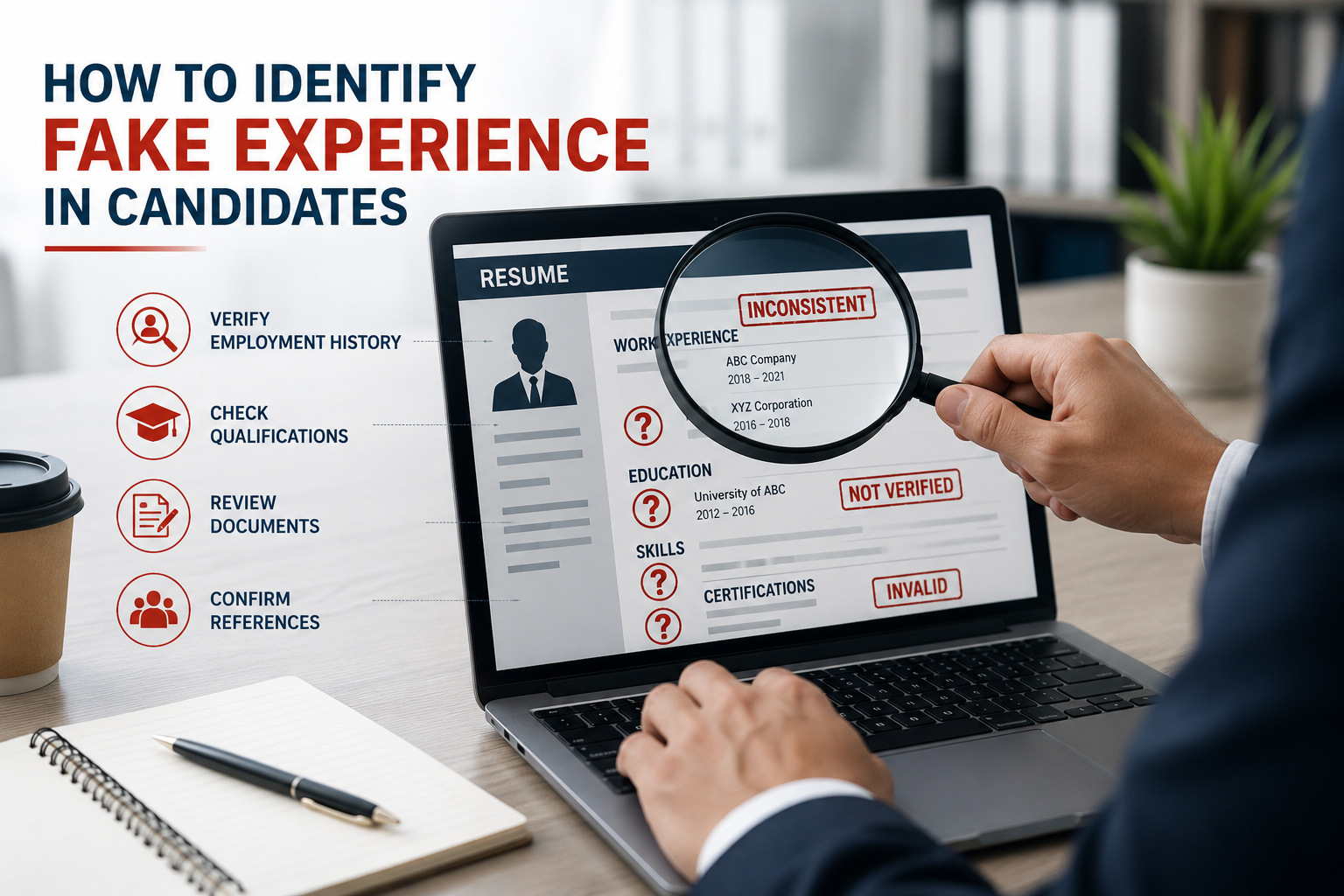
Why Fake Experience Is a Growing Hiring Risk
Many candidates feel pressure to stand out in a crowded job market. In some cases, this leads to minor exaggerations of responsibilities or achievements. In more serious situations, candidates may invent entire job roles, falsify employment dates, or submit forged experience certificates.
Hiring someone with fake experience can create immediate and long-term challenges. An employee who lacks the skills they claim to possess may struggle to perform critical responsibilities, impacting productivity and team performance. In regulated industries such as finance, technology, healthcare, and professional services, the consequences can be even more severe.
Background verification has become an essential part of modern recruitment because it helps organizations confirm whether a candidate’s professional history is accurate and legitimate. Employment background checks commonly verify identity, previous employment, education, and professional credentials.
Common Signs of Fake Experience
Identifying fake experience often requires looking beyond the resume itself. While some inconsistencies are obvious, others can be difficult to detect without professional verification.
One of the most common warning signs is a resume with vague job descriptions. Candidates who genuinely performed a role are usually able to discuss specific projects, challenges, and achievements in detail. Those with fabricated experience often provide general answers that lack depth.
Another red flag is unexplained employment gaps that are disguised with questionable freelance work or consulting positions. While legitimate freelance experience certainly exists, employers should seek supporting evidence when the timeline appears inconsistent.
Frequent job changes within very short periods may also warrant further examination. Although career mobility is normal, repeated short-term roles without clear explanations can indicate potential discrepancies.
Inconsistencies between a resume, LinkedIn profile, and interview responses should also be investigated. Research has shown that fake professional profiles and misleading information can be difficult to detect without careful review and verification processes.
Pay Attention During the Interview
The interview process often provides valuable clues about a candidate’s actual experience. Instead of asking general questions, employers should focus on practical and role-specific discussions. Asking candidates to explain how they solved a particular problem, managed a project, or handled a challenging situation can reveal whether their experience is genuine.
Candidates with authentic experience typically provide detailed examples, including the context, actions taken, and measurable outcomes. Those with fabricated experience may struggle when asked follow-up questions or technical details. Another effective approach is to ask the same topic in different ways throughout the interview. Inconsistent responses can indicate that a candidate is relying on memorized answers rather than real experience.
Verify Employment History
Employment verification remains one of the most reliable ways to identify fake experience.
A proper employment verification process confirms:
- Previous employers
- Job titles
- Employment dates
- Reporting structures
- Key responsibilities
Many organizations discover discrepancies only after conducting formal employment checks. Studies have shown that information provided by applicants often differs from information reported by previous employers or references.
For businesses operating across multiple countries, employment verification becomes even more important because international hiring can make it easier for candidates to provide unverifiable information.
Check Professional Credentials Carefully
Candidates may also exaggerate certifications, licenses, or educational qualifications to strengthen their applications.
Employers should verify:
- Academic qualifications
- Professional licenses
- Industry certifications
- Training credentials
Fake certificates and forged qualifications remain a concern across multiple industries. Reports have highlighted the increasing use of falsified experience documents and credentials during recruitment processes. Verifying these credentials directly with issuing institutions can help organizations avoid costly hiring mistakes.
Use Background Screening Services
Manual verification can be time-consuming, especially when hiring large numbers of employees or conducting cross-border recruitment. Professional background screening services provide businesses with a structured approach to candidate verification. These services can validate employment records, educational qualifications, identity information, and other critical details before an offer is finalized.
For businesses in Singapore, Jakarta, and throughout Southeast Asia, professional screening solutions help reduce hiring risks while supporting compliance and workforce integrity. Background screening is particularly valuable for positions involving financial responsibilities, access to confidential information, leadership roles, or customer-facing functions.
Conclusion
Fake experience remains one of the most overlooked hiring risks facing businesses today. As recruitment becomes increasingly digital and competitive, employers must take proactive steps to verify candidate information before making hiring decisions.
By combining thorough interviews, employment verification, credential checks, and professional background screening, organizations can significantly reduce hiring fraud and improve workforce quality.
For businesses across Singapore, Indonesia, and Southeast Asia, investing in proper background verification is not just a recruitment best practice it is a critical part of risk management and long-term business success.
Frequently Asked Questions (FAQs)
1. How common is fake experience on resumes?
Resume fraud is more common than many employers realize. Candidates may exaggerate job responsibilities, employment dates, qualifications, or professional achievements.
2. What is the best way to verify work experience?
Employment verification through previous employers is one of the most effective methods for confirming work history and identifying discrepancies.
3. Can background checks detect fake experience?
Yes. Professional background screening services can verify employment records, qualifications, credentials, and identity information.
4. Why is employment verification important?
Employment verification helps businesses reduce hiring risks, prevent fraud, and ensure candidates possess the experience they claim.
5. Which industries benefit most from background screening?
Industries such as finance, healthcare, technology, logistics, consulting, and professional services benefit significantly from comprehensive background verification.